
"soil requirements"
4000 article(s) found

Is Mexican Chiapas Coffee Organic Coffee? is Mexican Coffee Organic Coffee
Professional coffee knowledge exchange more coffee bean information please pay attention to the coffee workshop (Wechat official account cafe_style) Mexican coffee logo 1: organic coffee in all coffee production, Arabica coffee accounts for 70% of the 80%, but it on the weather, soil environment requirements are very high, and the ability to resist insect pests is quite poor. So, many grow coffee in Arabica.
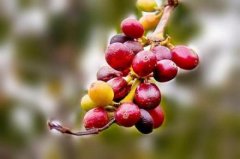
Coffee cultivation Coffee can not be grown in any environment
Coffee can not be grown in any environment, because it is originally a plant growing in a tropical rain forest. In systematic development, coffee forms the habit of calm wind, cool, shaded or semi-shaded and humid environment. Therefore, coffee has strict requirements on planting conditions. We call the strips on both sides of the equator, between latitudes 25 degrees south and north, suitable for coffee growth as coffee belts. 1. Temperature. Yes

Basic knowledge of coffee conditions for planting coffee trees
Coffee belt: coffee can not be grown in any environment, because it is originally a plant growing in a tropical rain forest, and in phylogeny, it forms the habit of requiring calm wind, cool, shaded or semi-shaded and humid environment. We call the strips on both sides of the equator between latitudes 25 degrees south and north suitable for the growth of coffee trees as coffee belts. Temperature: the requirement for temperature varies with the species of cultivation, small

Introduction to the Development History of cultivation and planting techniques for Coffee seedlings
Coffee planting technology introduces the origin of coffee trees in Ethiopia in Africa. In botany, coffee trees belong to the evergreen trees of the subgenus Rubiaceae, and coffee beans, commonly known as coffee beans, are the seeds of the fruit of coffee trees, just because they are shaped like beans, so they are called coffee beans. Climate is the decisive factor for coffee cultivation, and coffee trees are only suitable for growing in the tropics or subtropics.

The third wave of boutique coffee history coffee trend
The third wave of six evolutionary elements: 1. Pay attention to the regional flavor the second wave of coffee people are used to describing coffee flavor in terms of producing country. However, there are dozens of coffee varieties and different climates and soil and water environments in the same country, so it is not necessary to buy the right variety and soil and water in the right country. The third wave is changed to a more specific producing area, manor and latitude.

Introduction to the characteristics of Costa Rican Coffee
There are many excellent producing areas in Costa Rica, and the high-quality producing areas of Costa Rica have a common understanding of quality, that is, it requires the use of mature coffee fruits to ensure the production of high-quality coffee. Generally speaking, a large amount of water is used in the post-processing of picked coffee fruit, but the advanced production equipment in Costa Rica saves the use of water resources to the greatest extent.

A brief introduction to the History and Culture of the Origin and Development of Arabica Fine Coffee beans
Arabica? The planting conditions of coffee are harsh, requiring higher elevations (above 2000 meters above sea level), fertile soil fertility, adequate moisture, proper sunshine conditions and shade. Arabica? Coffee tree species have poor ability to resist diseases and insect pests and are easy to be damaged. In addition, the annual output of coffee trees per unit area is also lower. At the moment? Arabica? Grow coffee

Introduction of Costa Rican Coffee Manor Fire Phoenix Manor
There are many excellent producing areas in Costa Rica, and the high-quality producing areas of Costa Rica have a common understanding of quality, that is, it requires the use of mature coffee fruits to ensure the production of high-quality coffee. Generally speaking, a large amount of water is used in the post-processing of picked coffee fruit, but the advanced production equipment in Costa Rica saves the use of water resources to the greatest extent.

Characteristics of Guatemalan Vivette Nan Fruit Coffee beans Market Price of Guatemalan Coffee
For the exchange of professional baristas, please follow the coffee workshop (Wechat official account cafe_style) Guatemala Guatemala, which is famous for its highland topography, famous coffee producing areas include: Antiqua (Coban) Atitlan (Huehuetenango) San Marco (San Marco) among which Vivette Nanguo is the top elite.

What are the main varieties of coffee beans
The Robastian coffee tree, which originated in the Congo in Africa, accounts for about 20% to 30% of the world's production. Luoba Jinta coffee tree is suitable for planting in the lowlands below 500 meters above sea level, has a strong adaptability to the outside world, can resist bad weather, resist diseases and insect pests, and is in soil preparation. Weeding and pruning do not require much manual care, and can be allowed to grow in the wild, which is easy.

Introduction to the producing area of Yunnan small Coffee Huaguoshan Coffee Bean Flavor description method
The flavor description of Yunnan small-grain coffee beans the characteristics of the producing area introduce that the growth and development of coffee is closely related to the climatic and environmental conditions. In the areas where the wind is strong, the temperature is high, the light is strong, and the soil is easy to dry, the axillary buds of plant branches tend to differentiate into flower buds, and the growth of branches is small, which is easy to cause premature senescence. Therefore, it is necessary to choose a place with quiet wind, high humidity and short light as a garden. Small grains of coffee are

The conditions for planting coffee trees in the basic coffee belt.
Coffee belt: coffee can not be grown in any environment, because it is originally a plant growing in a tropical rain forest, and in phylogeny, it forms the habit of requiring calm wind, cool, shaded or semi-shaded and humid environment. We call the strips on both sides of the equator between latitudes 25 degrees south and north suitable for the growth of coffee trees as coffee belts. Temperature: the requirement for temperature varies with the species of cultivation, small

Costa Rican coffee producing areas from Tarasu introduce boutique coffee.
There are many excellent producing areas in Costa Rica, and the high-quality producing areas of Costa Rica have a common understanding of quality, that is, it requires the use of mature coffee fruits to ensure the production of high-quality coffee. Generally speaking, a large amount of water is used in the post-processing of picked coffee fruit, but the advanced production equipment in Costa Rica saves the use of water resources to the greatest extent.

Introduction of Costa Rican coffee with many excellent producing areas
There are many excellent producing areas in Costa Rica, and the high-quality producing areas of Costa Rica have a common understanding of quality, that is, it requires the use of mature coffee fruits to ensure the production of high-quality coffee. Generally speaking, a large amount of water is used in the post-processing of picked coffee fruit, but the advanced production equipment in Costa Rica saves the use of water resources to the greatest extent.

Flavor description of Costa Rican coffee beans
In Costa Rica, in addition to the coffee bars in the north and south, the unique highland volcanic soil environment, acidic soil and trace elements, high altitude and suitable difference between day and night make Arabica coffee grown in this land. Unique boutique grade high-quality coffee. Tarrazu Tarazhu producing area is the best coffee producing area in the country, with high quality coffee.

Boutique Coffee beans Costa Rican Coffee Manor-Raminita Manor
Author: Ellen Li Yi Link: https://zhuanlan.zhihu.com/p/20469079 Source: Zhihu copyright belongs to the author. Commercial reprint please contact the author for authorization, non-commercial reprint please indicate the source. There are many excellent producing areas in Costa Rica, and the high-quality producing areas of Costa Rica have a common understanding of quality, that is, ripe coffee fruits are required.

Characteristics of Yunnan small-grain Coffee introduction to the flavor description and treatment of Huaguoshan coffee
Yunnan small-grain coffee beans introduce that the growth and development of coffee is closely related to the climatic and environmental conditions. In the areas where the wind is strong, the temperature is high, the light is strong, and the soil is easy to dry, the axillary buds of plant branches tend to differentiate into flower buds, and the growth of branches is small, which is easy to cause premature senescence. Therefore, it is necessary to choose a place with quiet wind, high humidity and short light as a garden. Small coffee is a plant that needs water and is afraid of too much water.

Common sense of Coffee the basic environmental conditions of planting coffee trees
Coffee belt: coffee can not be grown in any environment, because it is originally a plant growing in a tropical rain forest, and in phylogeny, it forms the habit of requiring calm wind, cool, shaded or semi-shaded and humid environment. We call the strips on both sides of the equator between latitudes 25 degrees south and north suitable for the growth of coffee trees as coffee belts. Temperature: the requirement for temperature varies with the species of cultivation, small

Introduction of Costa Rican Coffee Manor with many excellent producing areas
There are many excellent producing areas in Costa Rica, and the high-quality producing areas of Costa Rica have a common understanding of quality, that is, it requires the use of mature coffee fruits to ensure the production of high-quality coffee. Generally speaking, a large amount of water is used in the post-processing of picked coffee fruit, but the advanced production equipment in Costa Rica saves the use of water resources to the greatest extent.

Introduction to the taste of manor flavor of Costa Rican boutique coffee beans
There are many excellent producing areas in Costa Rica, and the high-quality producing areas of Costa Rica have a common understanding of quality, that is, it requires the use of mature coffee fruits to ensure the production of high-quality coffee. Generally speaking, a large amount of water is used in the post-processing of picked coffee fruit, but the advanced production equipment in Costa Rica saves the use of water resources to the greatest extent.